Should you shave before laser hair removal? The follicle is the point
Shaving usually leaves the hair root available as a laser target; waxing and plucking remove it. The right timing and method still come from the treating practice's device- and skin-specific instructions.
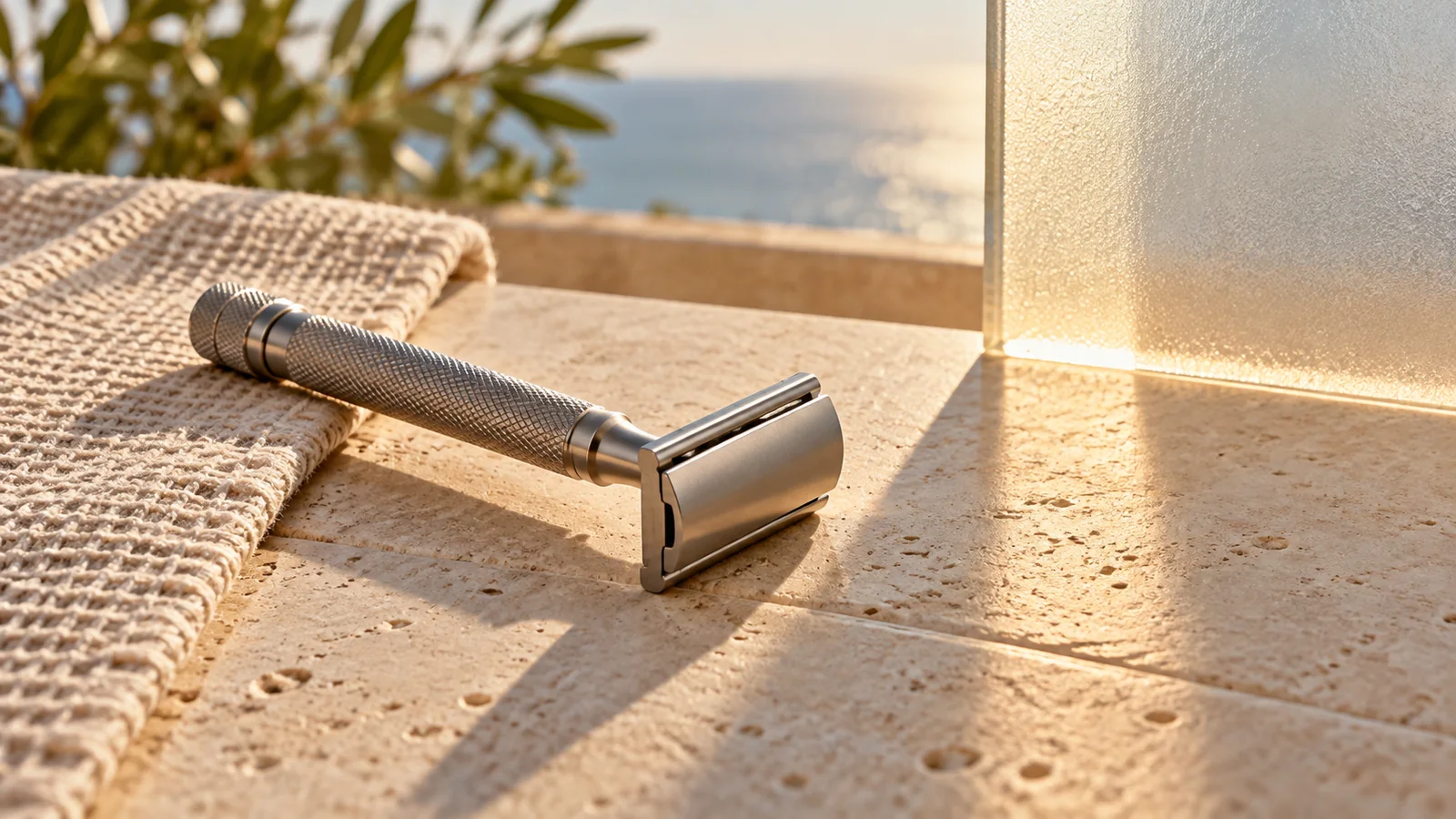
Clinics commonly ask patients to shave before laser hair removal because shaving shortens the visible shaft while leaving the follicle available as a target. Waxing or plucking removes hair from the root and can interfere with a planned laser session. There is no safe universal “shave exactly 24 hours before” rule for every skin, site, device or clinic: ask the treating practice when and how it wants the area prepared, and tell it if the skin is irritated or the hair was recently removed from the root.123
The reason shaving and waxing get different answers
Laser hair removal targets pigment associated with hair in the follicle. A razor cuts the hair that is visible above the skin; it does not pull out the follicle’s hair in the way waxing or tweezing can. A physician-authored American Society of Plastic Surgeons guide therefore describes shaving as compatible with preparation and advises against waxing or plucking before a session. That is a mechanism explanation, not a promise that every visible hair will respond.23
| What happened before the visit | Why the clinic needs to know | Useful question |
|---|---|---|
| Shaved or closely trimmed | Surface length and any razor irritation affect session preparation | When should I do this for my treatment area? |
| Waxed, tweezed or threaded | The follicular hair target may have been removed | Does my session need to be rescheduled? |
| Used depilatory cream | Chemical irritation and hair removal need provider assessment | Should the area be examined before treatment? |
| Did not remove visible hair | Long surface hair may alter the treatment setup | Will the practice prepare the area, or should I follow a different plan? |
Some professional preparation guides say to shave within a day of treatment; others use different windows. Their instructions also vary with treatment area and device. AAD’s patient guidance tells people to follow the dermatologist’s specific preparation instructions. If the clinic’s written plan differs from a blog’s timing, confirm why with the treating team instead of treating a public timetable as a personal clearance.12
The two calls worth making before the appointment
First, tell the practice if you have waxed, tweezed or threaded the site recently. Ask whether enough target hair is likely to be present for the proposed session and whether it should be moved. Do not cover the history by shaving over the site; that cannot restore a recently removed root. This is a scheduling conversation, not an invitation to estimate the hair cycle yourself.
Second, mention active irritation, a rash, a cut, recent sun exposure or a product that has changed the skin’s sensitivity. The clinician may need to examine the skin or alter the plan. Mayo Clinic and AAD both frame preparation as more than a grooming step: hair and skin characteristics, medicines, sun exposure and the area being treated influence the overall treatment discussion.13
Do not stop a prescribed medicine or try to hide a product use based on a generic laser checklist. Give the practice a complete list and ask the clinician what, if anything, changes. Likewise, if coarse hair makes a close shave uncomfortable, ask whether the practice has a site-specific alternative. The point is a suitable treatment surface, not performing a perfect razor routine to qualify for care.
A preparation note that is actually useful
Before the visit, request instructions that name the site and date, whether the clinic expects shaving or handles trimming, when root-removal methods should stop, and what to do if the skin becomes irritated. Ask whether sunscreen, makeup, deodorant or another topical product should be addressed on the treatment day. Written instructions make it easier to distinguish this particular practice’s protocol from advice meant for a different laser or body area.
This article is deliberately narrower than a laser-versus-waxing decision. The latter asks which hair-removal method fits a person’s goals; here the choice of laser is already being considered and the question is how to preserve its target and avoid a wasted visit. It is also different from the shedding-versus-regrowth guide, which concerns what becomes visible after treatment.
Use Treomark’s laser hair-removal provider page to find a relevant consultation. A strong practice answer gives a specific preparation plan, asks about recent root-removal and skin changes, and can explain what happens if the site is not ready on the day.
Sources
- American Academy of Dermatology Association. Laser hair removal: Preparation. Patient guidance to follow the treating dermatologist's individualized preparation instructions and disclose relevant history and medicines. Accessed .
- American Society of Plastic Surgeons. Laser hair removal: A step-by-step process. Physician-authored explanation of shaving, retained follicle targets and why waxing or plucking differs; its timing is an example, not a universal rule. Accessed .
- Mayo Clinic. Laser hair removal. Clinical overview of targeting hair follicles, preparation and the importance of skin and hair characteristics. Accessed .